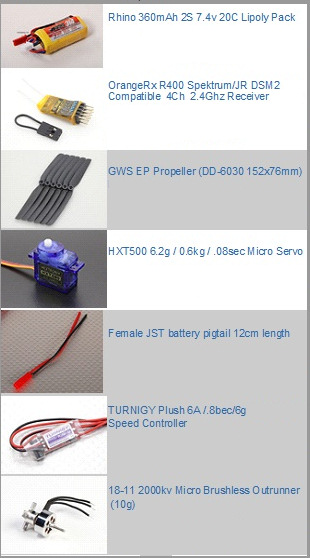
Above - List of equipment for the mini-CTD
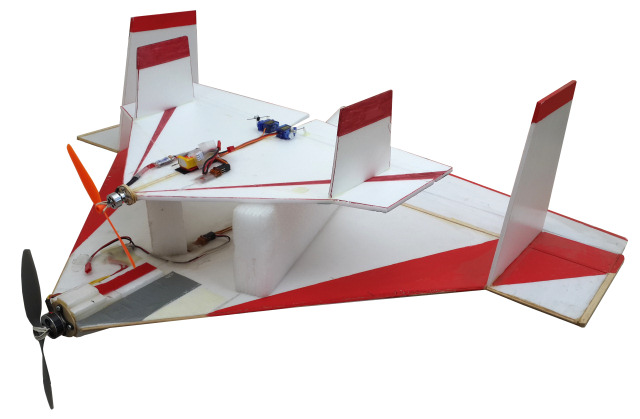
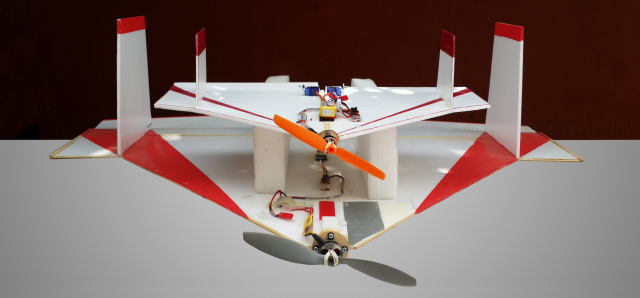
This page details modifications to our CTD model made by Phil Rudram of South Africa. First, Phil created an updated version of the original using modern materials and the latest motor and battery technology. Following this he set about designing a half-scale 'mini CTD' with a sparkling performance. Both models are detailed on this page.
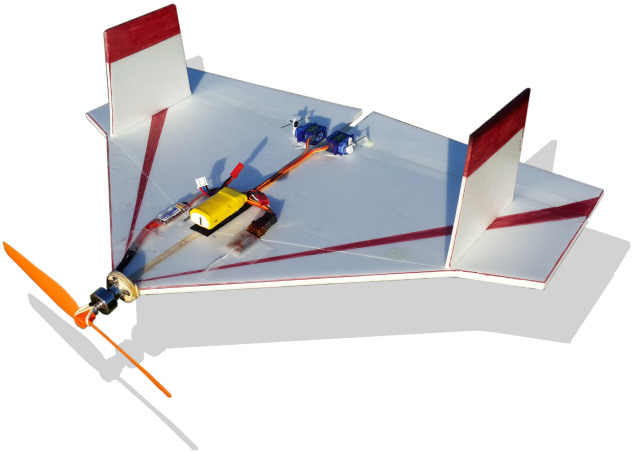
Updated CTD
"The entire model was made out of a single piece of Depron with some 6 mm x 12 mm balsa pieces for a keel. The leading edges have 3mm round Birch strips for re enforcing. I have used a Turnigy Park 300 Brushless with an 8 x 3.8 prop and a two cell 1000 lipo. Follow this link to see it on Youtube. The plane can loop and roll. I am now running it on 3 cells using the full 70 watts from the motor. It is a fantastic plane to fly and quite hot with the extra power."

Mini CTD
"After 8 days of continuous rain I was quite frustrated and looking for something to do with parts and equipment available to me. I decided to make a half size version of my favourite flyer. I scaled the 6 panels of the original design by half and sorted depron off cuts to size, cut them out and glued them together with a 6mm x 12 mm balsa strip for a centrepiece or keel. The engine mount is 3 ply. The main panels are 6mm depron and the fins are 3mm depron. The motor is a HXT 10 gram 2000 kv motor (with prop saver), 6 x 3 prop with a 5 amp esc. two 5 gram HXT servos, a micro 4ch RX and a 2 cell 360 mAh Lipo. The whole plane with a wing span of 45cm weighs 90 grams RTF! No spars in the wing ! If you gave the mini CTD fold down or removable fins you could store it in a 16 inch Pizza box !"
"The maiden flight was perfect, the Cof G was 100%. My test pilots had every one gob smacked. What an amazing little plane. Loops, inside loops rolls 4 point rolls, rolling circles and dramatic spinning dives. A little faster than my full sized CTD but with the same characteristics. I will be putting twin rudders on my original model to enable it to do knife edges, flat turns and barrel rolls. Playing with this concept has been a lot of fun and the big secret is its simplicity."
"The mini CTD is ideal for indoor flying whilst the very good power to weight ratio enables it to be flown out doors. The two flights were made with a wind speed of 8 /10 kph and it was a bit bumpy.The mini CTD remained quite controllable at all times.The raised eyebrows of my experienced test pilots very quickly turned into broad smiles."